
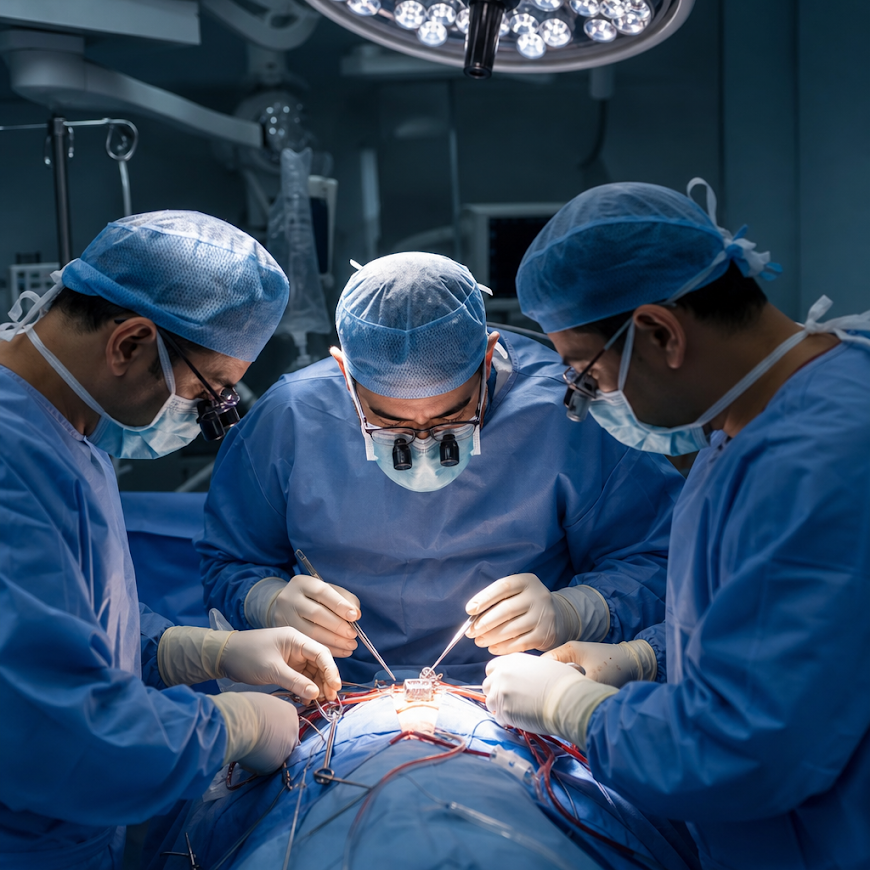
For decades, patients across the Gulf Cooperation Council facing end-stage heart failure had one realistic option: travel abroad. London, Cleveland, Houston — these cities became familiar destinations for families navigating the most frightening diagnosis a cardiologist can deliver. That reality has shifted dramatically over the past ten years, and the shift is not merely logistical. It represents a fundamental transformation in how advanced cardiac care is conceived, funded, and delivered across the Arabian Peninsula. Understanding how this transformation happened — and what it means for patients today — requires looking at both the clinical infrastructure that has been built and the broader medical culture that has evolved alongside it.
Table of Contents
The Historical Gap in Regional Cardiac Care
The Gulf states have long invested heavily in healthcare infrastructure, but cardiac transplantation presented a unique set of challenges that general hospital investment could not easily solve. A functioning transplant program requires far more than a skilled surgical team. It demands a mature organ procurement network, a legal and ethical framework governing donor consent, intensive care units capable of managing immunosuppressed patients over months, and a multidisciplinary team that includes transplant cardiologists, infectious disease specialists, nephrologists, and dedicated transplant coordinators. Building all of these components simultaneously, while also training local physicians to international standards, was an undertaking that took sustained political will and significant financial commitment.
The UAE was among the first Gulf states to recognize that medical tourism — while generating short-term solutions for individual patients — was not a sustainable model for a growing population with increasing rates of cardiovascular disease. Lifestyle factors including diet, sedentary behavior, and high rates of diabetes and hypertension have made heart disease one of the leading causes of mortality across the region. The epidemiological pressure made investment in advanced cardiac care not merely desirable but strategically necessary.
Building the Infrastructure: More Than Bricks and Equipment
Organ Donation Frameworks and Legal Reform
One of the most significant barriers to transplant medicine in the Gulf was the absence of robust organ donation legislation. Without a clear legal framework governing brain death determination and donor consent, procurement of organs from deceased donors was effectively impossible. The UAE addressed this through the Federal Law on Organ Transplantation, which established the legal basis for deceased donor programs and created oversight bodies to ensure ethical compliance. This legislative foundation was not glamorous work, but it was the essential precondition for everything that followed. Without it, even the most talented surgical team would have had no organs to transplant.
Training a Generation of Regional Specialists
Surgical skill can be imported, but sustainable programs require locally trained expertise. Over the past fifteen years, Gulf health authorities have invested in sending physicians abroad for fellowship training at leading transplant centers, while simultaneously attracting internationally credentialed specialists to work and teach within the region. This dual strategy has begun to produce a cohort of transplant cardiologists and cardiac surgeons who combine international training with deep familiarity with the regional patient population — a combination that has real clinical value, since risk factors, medication adherence patterns, and post-transplant support networks can differ meaningfully across populations.
The role of clinical research in accelerating this development cannot be overstated. Understanding how clinical trials support advancements in medicine and patient care helps explain why regional centers that participate in international research networks develop faster than those that operate in isolation. Access to trial data, collaborative protocols, and peer review processes compresses the learning curve for emerging programs and ensures that patients benefit from the latest evidence-based approaches rather than practices that may already be outdated.
What Patients Gain When Care Is Available at Home
The clinical arguments for regional transplant capability are compelling, but the human arguments are equally powerful. Heart transplantation is not a single event — it is the beginning of a lifelong relationship between a patient and a medical team. Post-transplant patients require frequent monitoring, medication adjustments, biopsy procedures to detect rejection, and management of the complex side effects associated with long-term immunosuppression. When a patient receives a transplant abroad and then returns home, continuity of care becomes genuinely difficult. Communication between overseas transplant centers and local physicians is imperfect, medical records may not transfer seamlessly, and the patient may find themselves navigating a system that was not designed to manage their specific post-transplant needs.
When transplantation is available locally, the patient’s entire care journey — from pre-transplant evaluation through surgery and into the years of follow-up — can be managed by a single integrated team. This continuity is not a luxury. Studies consistently show that outcomes in transplant medicine are closely tied to the quality of long-term follow-up care. A patient who can see their transplant cardiologist regularly, who has immediate access to their surgical team if complications arise, and whose family can be present throughout the process is a patient with meaningfully better prospects.
Cleveland Clinic Abu Dhabi: A Benchmark for Regional Excellence
Among the institutions that have defined what advanced cardiac care looks like in the modern Gulf, Cleveland Clinic Abu Dhabi occupies a distinctive position. The hospital was established as a partnership with one of the world’s most respected medical institutions, and its cardiac program reflects that heritage. Patients seeking Heart transplant UAE services at Cleveland Clinic Abu Dhabi have access to a program that meets international standards across every dimension — from the surgical team’s credentials to the post-transplant monitoring protocols and the multidisciplinary support services that surround the clinical care. The program represents not just a facility but a philosophy: that patients in the UAE deserve the same standard of care available anywhere in the world, without leaving home to access it.
The Broader Significance for Gulf Healthcare Systems
The development of transplant capability in the Gulf carries implications that extend well beyond the patients who directly benefit. Advanced programs attract talent, generate research, and raise the overall standard of care across an institution. When a hospital builds a transplant program, it necessarily strengthens its intensive care capabilities, its pharmacy services, its laboratory infrastructure, and its nursing expertise. These improvements benefit every patient the hospital serves, not only transplant recipients.
There is also a powerful signal sent to the broader medical community. Physicians considering careers in the Gulf are more likely to choose institutions that offer complex, intellectually stimulating work. Transplant programs are among the most demanding and rewarding environments in medicine, and their presence helps attract and retain the kind of talent that elevates an entire healthcare system. As one perspective on community-centered medical practice illustrates, physicians who remain engaged with their communities — whether through clinical work, education, or research — drive improvements that ripple outward in ways that are difficult to quantify but impossible to ignore.
Conclusion: A Region That No Longer Exports Its Most Vulnerable Patients
The transformation of cardiac transplant capability in the Gulf is a story about infrastructure, legislation, training, and institutional commitment. But at its core, it is a story about patients — about families who no longer have to choose between the best possible care and the comfort of home. The Gulf has invested in building programs that can genuinely compete with the world’s leading centers, and the patients who benefit from that investment are the clearest measure of its success. For those facing end-stage heart failure in the UAE today, the options available represent a profound improvement over what existed even a decade ago, and the trajectory of continued development suggests that the best is still ahead.